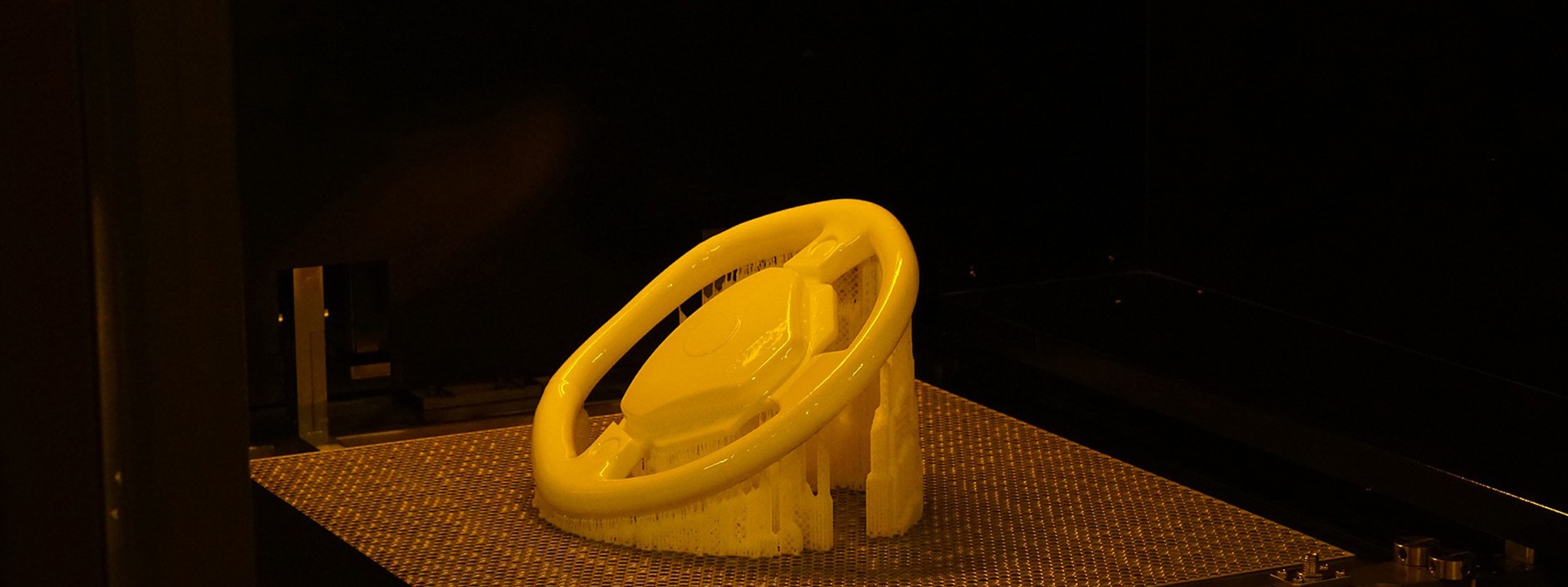
That’s when he and his team turned to Magforms’ SLA 3D printing solutions, redefining how they design, validate, and produce their products.
The team set an ambitious goal — to launch a new product module every month. To achieve that, they needed a process capable of moving from 3D model to functional prototype in just a few days.
After adopting the Magforms SL800 printer, their development cycle was dramatically shortened.
“Before, it took two to three weeks to go from a CAD model to a testable prototype. Now it only takes two days. And if the prototype passes testing, that same print becomes the final production part — no mold required.”
The team primarily uses 355nm engineering resin, which offers an excellent balance of strength, toughness, and surface smoothness — ideal for both structural and functional components. Thanks to the SL800’s large build volume, they can print numerous parts in one batch, seamlessly transitioning from prototype validation to small-scale production.
Today, the startup produces around 4,000 modular components per month. Using traditional injection molding, each mold could cost over ¥100,000 RMB, and every design change would require remaking the mold — adding delays and expense.
With Magforms’ system, they can:
Reduce development time by 80%, from 3–4 weeks down to 3–4 days;
Cut prototyping costs by over 60%, with no need for outsourcing or tooling;
Test multiple design versions in parallel, printing over 200 iterations in a single run.
“We can print overnight and start assembly testing the next morning. A month used to mean one iteration — now we can do five in a week.”
This speed not only drives continuous innovation but also enables the team to react quickly to market feedback, maintaining a steady stream of new products.
Breaking the Boundaries of Traditional Design
The company’s products emphasize modularity and customization, and customers often request highly personalized designs. Traditional manufacturing methods are limited by tooling constraints — but 3D printing eliminates those barriers.
Designers can freely modify shapes, textures, and functional structures — even produce multiple customized versions in one batch — all without increasing costs.
“We no longer worry about the cost of change. Design iteration has become a daily routine, not a risk.”
As the business grows, the team plans to launch an online customization platform, allowing customers to modify designs, choose colors, and select modules directly on the web. The system will automatically generate printing tasks and send them to Magforms’ production line.
“Our goal isn’t just to improve efficiency — it’s to transform how products are developed. Magforms’ technology gives small teams industrial-grade speed and creative freedom.”
Agile Manufacturing: Accelerating the Journey from Idea to Market
From Concept to Reality: Turning Product Development into a “Weekly Cycle”